
urVetMD · Medical records
A medical record that accumulates instead of restarting
For veterinarians and technicians. How notes, vitals and history are recorded in urVetMD, and why each entry says where it came from.
On a phone
Live screens from the product, captured on a phone with demonstration data.
SOAP notes with a clear finish line
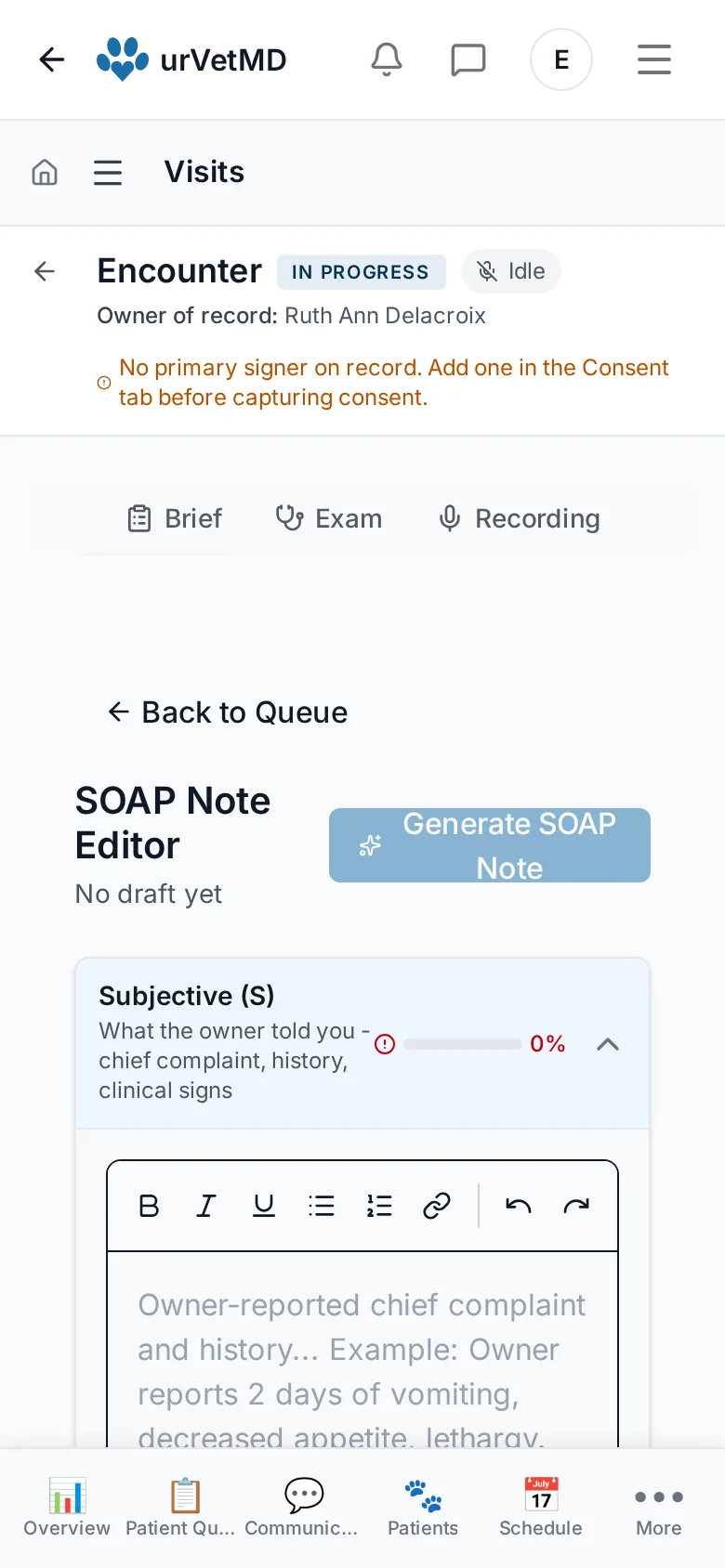
A SOAP note moves through three stages: draft, review and finalize. A draft can be prepared from the recording of the visit, but it is held until a veterinarian signs it, so nothing becomes part of the record on a machine’s say-so.
Once a note is finalized it cannot be changed. A correction is added as an amendment beside the original, so anyone reading the record later can see what was written, what was corrected and when.
Vitals that warn you while you type
Record temperature, weight, heart rate, respiratory rate and observations. Values outside the reference range for the species are flagged as you enter them, not after the visit.
Real-time flagging covers dogs, cats, horses, rabbits and birds. Other species are not yet checked against a species-specific range, and the screen does not pretend otherwise.
The longitudinal record
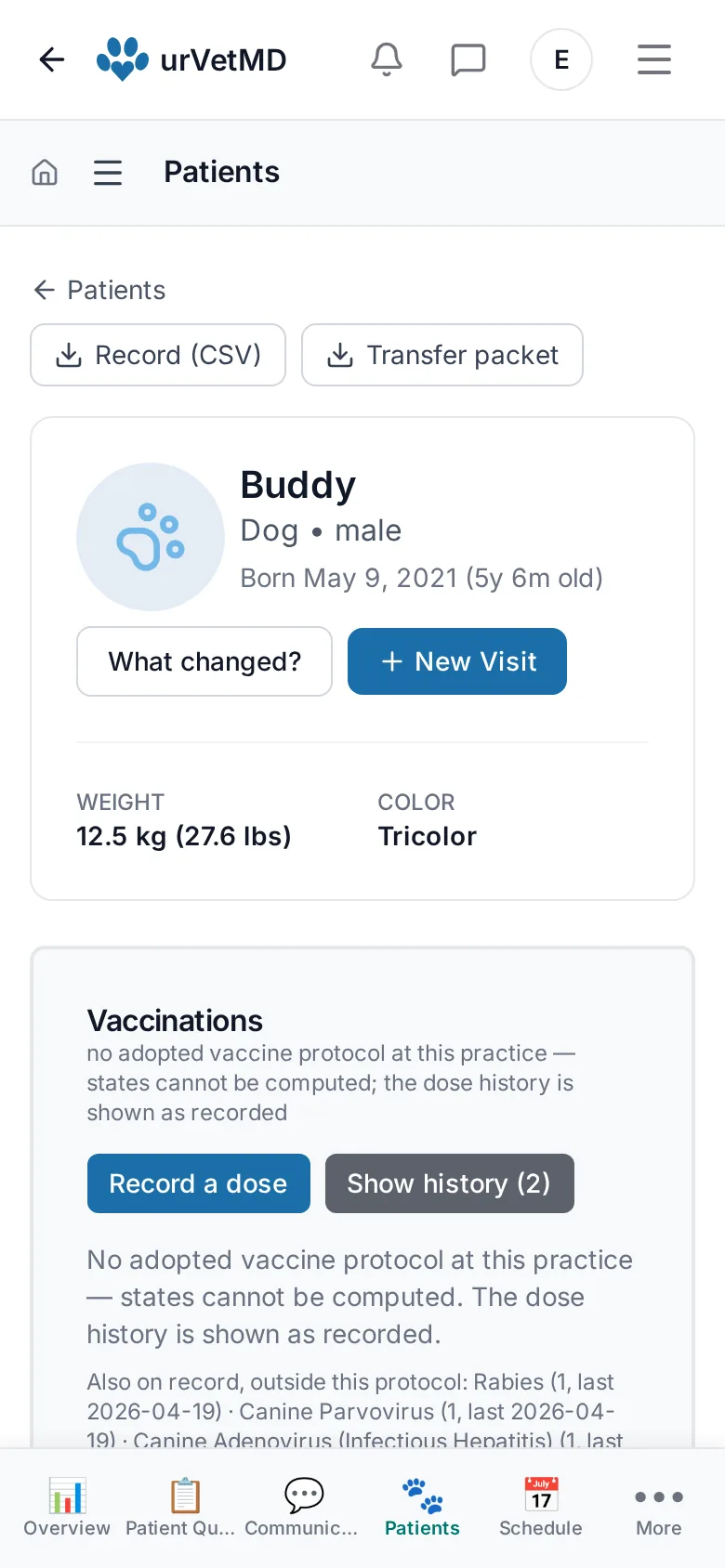
The patient record keeps vaccinations together with the protocol each dose was given under, a species-aware dental chart and dated visits, including care recorded somewhere else.
Every entry says who recorded it, when and under what authority, and whether it was attested by a veterinarian or supplied by the owner. You can weigh an owner’s note differently from a colleague’s exam, because you can tell them apart.
Why the record follows the animal
Owners move, change practices and rehome animals. In most systems the history stops at the door and arrives later as a phone call, a fax or an owner’s memory. In urVetMD the record belongs to the animal, so it persists through changes of owner, practice, shelter and city.
A tag, microchip or biometric identity resolves to the same record. Access still follows the relationship and the role: being on the platform does not let anyone read a patient’s file.
Lab results, imaging and reference
Lab results arrive in an inbox scoped to your clinic, so nothing lands where nobody is watching. Imaging has a searchable worklist. Species biology, breed information and clinical reference intervals are in the knowledge base, without leaving the dashboard.
DNA kit ordering by species opens once a laboratory partner is signed.
Questions
Can a finalized SOAP note be edited?
No. Finalized notes are immutable. A correction is recorded as an amendment, so the original stays readable.
Which species get vitals flagging?
Dogs, cats, horses, rabbits and birds. Other species are not yet flagged against a species-specific range.
Can I see care given at another practice?
Yes, where it was recorded on the animal’s record. Each entry shows who recorded it and under what authority.